Media & Insights

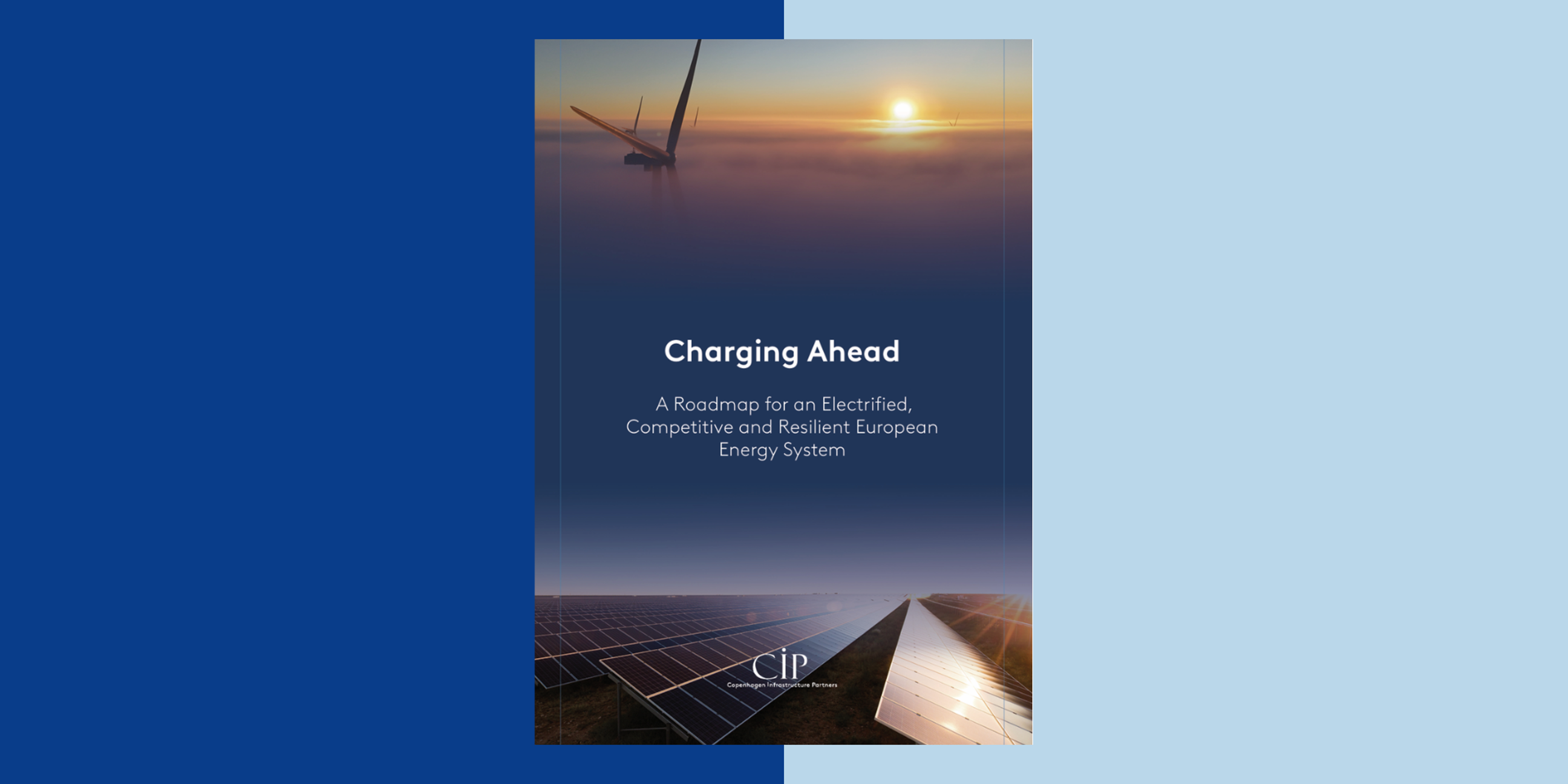
Charging Ahead

2050 Mock Up Blue
About the Charging Ahead report

In a period of profound political change and heightened geopolitical uncertainty, Europe’s energy system stands at a critical inflection point. This report sets out a roadmap for how Europe’s energy system can evolve towards 2050.

Europe has long been – and remains – heavily reliant on imported fossil fuels, which account for around 40% of total energy demand and cost approximately EUR 250 billion annually. This dependency leaves the energy system structurally exposed to external supply shocks and geopolitical risks, underscoring the need to strengthen European energy security.

Our analysis shows that Europe has a realistic path to deliver the energy transition while lowering structural energy costs through electrification and strengthening strategic autonomy and long‑term competitiveness.
Read the report


Charging Ahead – A Roadmap for an Electrified, Competitive and Resilient European Energy System

In times of heightened geopolitical uncertainty, the case for an integrated European energy system, deeper cross‑border coordination and faster delivery of shared infrastructure has never been stronger. Europe’s energy system is being reshaped at a moment where reducing reliance on imported fossil fuels is critical to long‑term competitiveness, affordability and security.

Among the conclusions:

  • Europe’s future competitiveness and energy security depend on accelerating electrification and the build‑out of cost‑competitive, homegrown clean energy supported by integrated energy infrastructure.
  • Electrification, grids and system flexibility investments are essential to delivering affordable, resilient and clean energy while strengthening industrial competitiveness.
  • The report outlines a concrete policy pathway to remove bottlenecks, reduce risk and unlock large‑scale private investment in Europe’s energy system.
  • Overall, the analysis shows how a renewables‑led energy system can form the foundation for lower and more stable energy prices across Europe.
Read the report
Sage USA 33
Affordability
40% reduction in power prices
Affordability increasingly comes from a structural shift in the energy cost base. Europe moves away from exposure and volatile global fuel markets and towards domestically produced clean electricity and long-lived infrastructure. In the Competitive & Resilient scenario power prices are forecasted to decrease by around 40%. Europe moves away from exposure to volatile global fuel markets and moves towards domestically produced clean electricity and long-lived infrastructure. Over time, this can lower and stabilise energy costs because the system relies less on imported fuels and more on assets with predictable operating costs. Affordability is therefore not only a question of short-term price peaks but of long-term system design and the cost of capital.
Resilience
80% reduction in import of fossil fuels
Resilience is shaped by reduced dependency on imported fossil fuels but also by operational robustness. Europe's fossil fuels import can be reduced by ~80% by 2050. As electrification increases, electricity becomes more system defining, and resilience depends increasingly on system stability, redundancy, and flexibility. A resilient system must be able to absorb shocks, manage variability and intermittency, and maintain reliability under stress. This makes grids, interconnectors, storage and other flexibility solutions critical infrastructure for European security of supply.
Clean energy
95% of electricity supplied by clean energy
Clean energy in 2050 is delivered primarily through a clean power system and large-scale electrification. In 2050, Europe can achieve ~2,800 GW of clean energy capacity, supplying close to 95% of all electricity demanded. Direct electrification becomes the main route to decarbonisation where feasible, because it replaces inefficient fossil combustion with highly efficient end-use technologies. Where electrification is limited or uneconomic, green hydrogen, clean fuels and carbon management solutions play targeted roles. Clean energy at scale therefore requires both large, clean energy generation deployment and the enabling system to integrate it.

CIP’s new 2050 report investigates how Europe’s energy system can evolve under different strategic choices and explores the energy transition towards 2050 through three illustrative scenarios.
Skærmbillede 2026 04 22 143327

Earlier copies of CIP's 2050 studies

Find earlier versions of CIP's 2050 studies below.

2025 version: Powering the future - a vision for Europe’s energy system in 2050
PDF (92.04 MB)
Download
2024 version: A vision for Europe’s energy production and infrastructure in 2050
PDF (24.50 MB)
Download